Nicholas De Leon

Nicholas De Leon

Technology journalist. Maker of fun things.

Senior Reporter at Consumer Reports, with nearly 20 years in tech journalism and earlier stops at Gizmodo, TechCrunch, News Corp's The Daily, Circa News and Vice/Motherboard. In my free time I try to find novel, useful applications for AI. Based in Tucson.

Projects

Working publications, not demos. Each one runs every day on a pipeline I designed, with a journalist's rules about sourcing written into the code.

tucsondailybrief.com The Tucson Daily Brief homepage, with the day's lead story and a list of morning headlines

Tucson Daily Brief

Publishing daily

A one-person local newsroom for metro Tucson, free to read with no ads. Every morning Claude Opus reads about two dozen local sources and writes the Daily Brief, with every item linked to where it came from. The site previews the agendas of 14 local governments and school boards, and goes out as a podcast read by an AI clone of my voice, a weekly newsletter and a Spanish edition.

It also runs ChatTDB, which answers questions about Tucson using only the site's own archive, with citations; Who They Are, org charts of the area's elected and appointed officials; and daily checks of permits, liquor licenses and development filings that rarely get reported anywhere else.

Covered by the Reuters Institute, TWiT's Intelligent Machines and This Week in Tech, and KGUN 9.

Visit tucsondailybrief.com

The live AI reporter

  • Shows up on its own. When a council or school board posts an agenda, it schedules itself to cover the meeting.
  • Listens live. It joins whatever livestream the body uses, even Zoom or Teams, transcribes every word as it's spoken, and stops when the meeting adjourns.
  • Drafts the story. Claude Opus writes a news report from the transcript.
  • I edit and publish. I check every draft against the transcript before it goes live.

More than 70 meeting reports since March 2026.
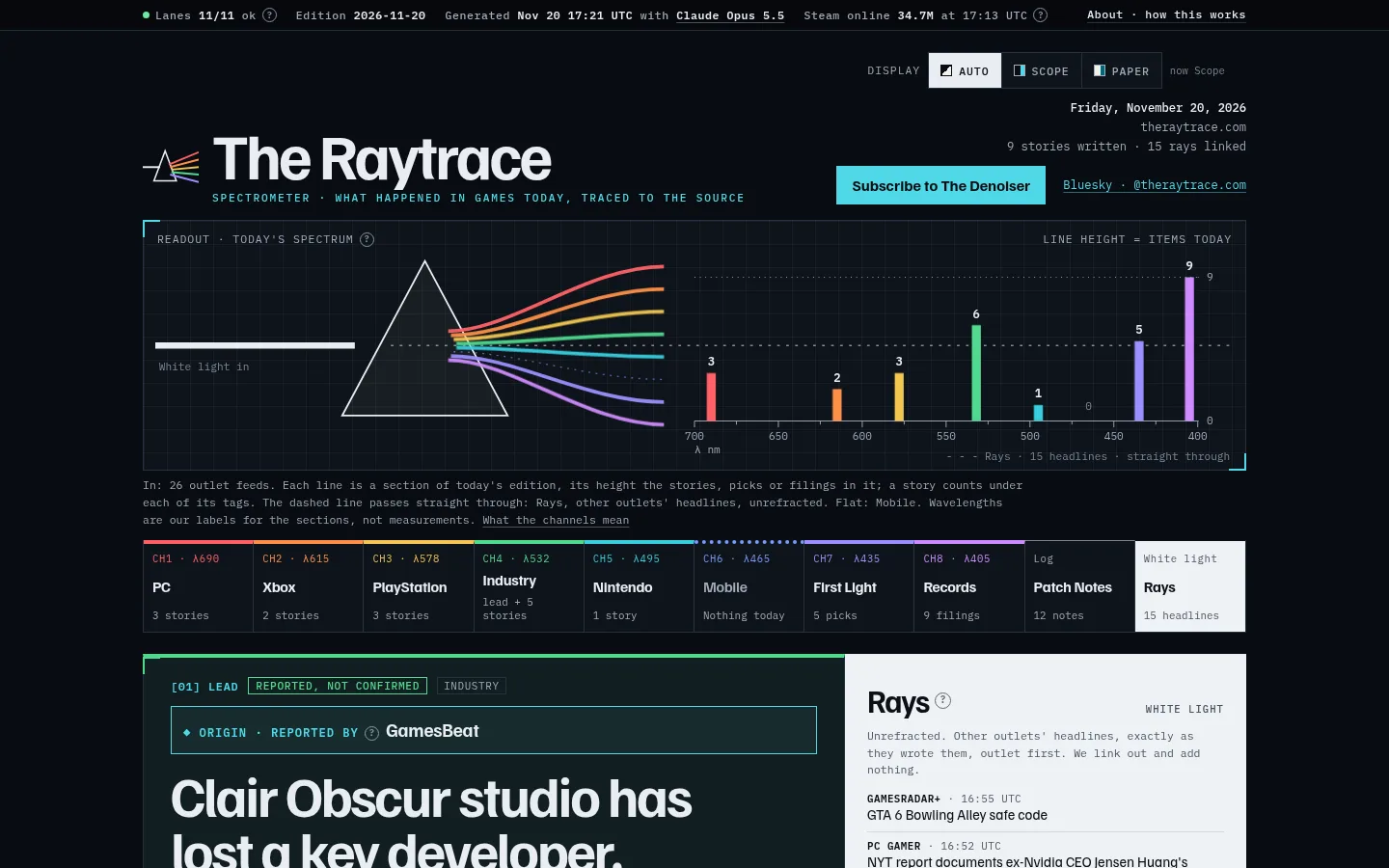
theraytrace.com The Raytrace homepage, with a prism chart showing how many stories ran in each section today

The Raytrace

Launched October 2026

The next step after the Tucson Daily Brief: a video game news site that runs largely on its own. Software gathers the news from publishers' own posts, storefronts, financial and labor filings, and dozens of outlets. AI models write each story from primary sources, and code checks every quote, number and attribution before anything publishes.

Its first original story came from a studio's answers to one of the AI's requests for comment. The site also runs a daily discovery engine for overlooked indie games and a weekly newsletter, The Denoiser.

Visit theraytrace.com

An AI editor in chief

  • It runs the editorial meeting. Before each of two daily editions, Claude Opus 5.5 reads everything the newsroom has, picks the lead, drops what isn't news, and assigns stories to smaller Claude models.
  • It sends its own requests for comment. Emails go out from "The Raytrace newsroom" after a 30-minute hold, so I can stop any of them from my phone. Replies go into the story, quoted word for word.
  • It investigates. A research desk works up to two questions a day from public data, like Steam review histories and SEC filings.
  • It checks itself. A fact check holds any story that fails, reader corrections are judged against the sources, and each night it reviews the day and tries code fixes for me to review.

My front-page calls always win, and I can pause everything from my phone.

localnews123.ai The Local News 123 landing page, with its waving newspaper mascot

Local News 123

In private beta

The Tucson Daily Brief, turned into a product anyone can run. Type in a town and it finds and verifies the community's official sources, monitors them around the clock, and drafts a cited daily edition for a local publisher to review and publish.

Visit localnews123.ai
deepdugout.com The Deep Dugout homepage, with scores from AI-managed matchups

Deep Dugout

AI-managed baseball

AI managers run all 30 MLB teams, making every lineup, pitching and bullpen call, and every decision is logged and explained. It doubles as a real-world test bench for new models, like Anthropic's Claude Fable 5 against OpenAI's GPT-5.6 Sol.

Visit deepdugout.com
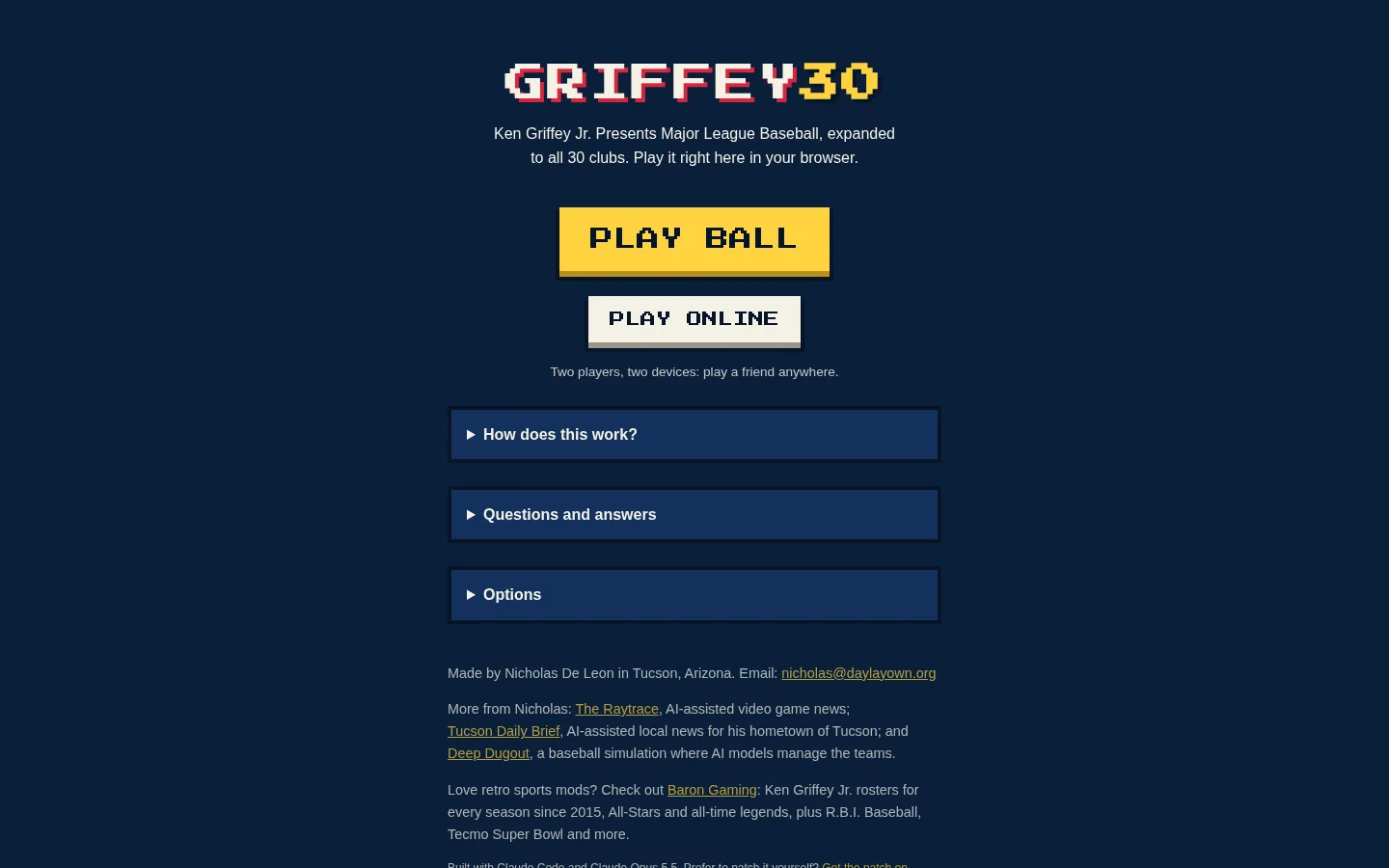
griffey30.com The Griffey 30 homepage, with Play Ball and Play Online buttons

Griffey 30

Free to play in your browser

My favorite baseball game, Ken Griffey Jr. Presents Major League Baseball for the Super Nintendo, expanded from 28 teams to all 30, with 2026 rosters, current logos and ballparks, and new Season and Franchise modes. I built it with Claude Code and Claude Opus 5.5 by reverse-engineering the 1994 cartridge. It plays in any browser, even online against a friend. Players bring their own copy of the game, and it never leaves their device.

The launch thread went viral on X, and the retro gaming YouTuber SNESdrunk covered it in a video.

Play at griffey30.com
matchdayinference.com The Matchday Inference homepage, with a layered, photocopied INFERENCE masthead

Matchday Inference

World Cup 2026

It started with a question: what could AI make that even the best-resourced newsroom on the planet couldn't? The answer was a bespoke matchday programme for every single reader.

For the 2026 World Cup, each reader chose their teams and a voice, like the Tactician, the Pub-Talker or the Historian. Every morning during the tournament they got an issue of their own, written overnight by OpenAI's GPT-5.5 from real match data and laid out like a photocopied punk fanzine.

Visit matchdayinference.com
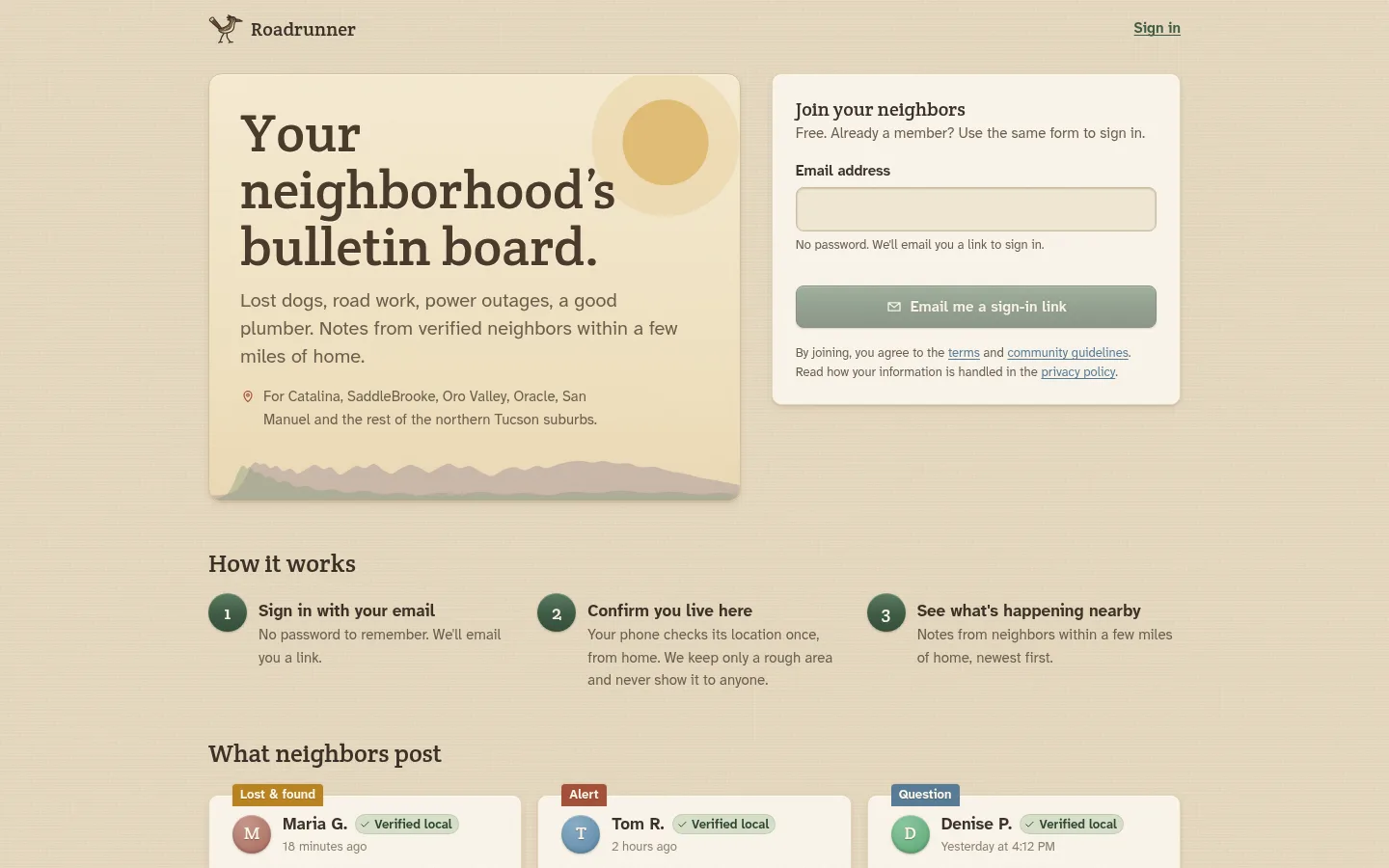
roadrunner.town The Roadrunner homepage: Your neighborhood's bulletin board, with a sign-up form and sample notes from neighbors

Roadrunner

Launched September 2026

A neighborhood board for the northern Tucson suburbs, built after Nextdoor kept widening what it counts as a neighborhood. Each member's phone confirms where they live once, and their board shows notes only from verified neighbors within a few miles of home, newest first. No algorithm decides what anyone sees, and no one's location is ever shown, only their town.

Visit roadrunner.town
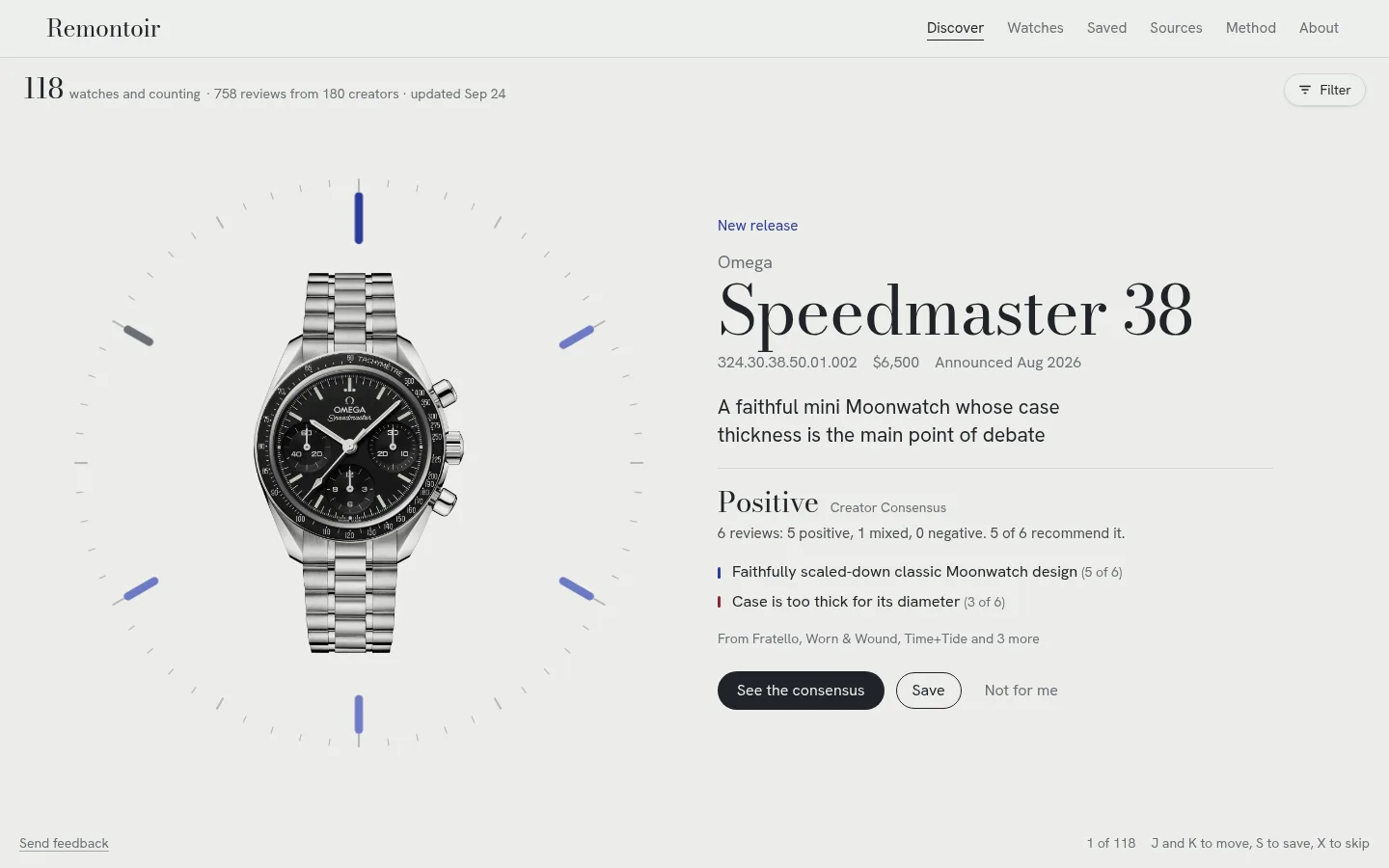
remontoir.watch The Remontoir homepage, showing the Omega Speedmaster 38 with a positive Creator Consensus from six reviews

Remontoir

Launched September 2026

Rotten Tomatoes for watches. Claude Opus 5.5 reads reviews from trusted watch YouTubers and writers and pulls out each opinion with a verified quote, then code tallies them into a Creator Consensus for every watch. The AI describes; the code counts. So far it covers 118 watches, from 758 reviews by 180 creators, and retailer or affiliate data never touch a verdict.

Visit remontoir.watch

Reporting

A few favorites from nearly 20 years covering consumer technology.

Consumer Reports, 2025
Should You Use an AI Browser Like ChatGPT Atlas?

AI browsers promise to automate web tasks but deliver little, while raising real security and privacy risks.

Consumer Reports, 2025
The Juan Soto of Routers

Rating WiFi routers by performance per dollar, modeled on baseball's wins above replacement.

Consumer Reports, 2024
Using Starlink to Get High-Speed Internet Service

A first-person test of Starlink at a rural Arizona home, through work, streaming and gaming.

Consumer Reports, 2023
How to Do a Social Media Detox

A four-step plan for cutting back on social media to make time for real life.

Consumer Reports, 2022
How to Delete 100,000 Emails From Your Inbox

Mass-deleting a Gmail inbox in two days to dodge a storage subscription.

Vice, 2017
Phony VPN Services Are Cashing In on America's War on Privacy

A fake VPN that used hacked user data to scam people worried about ISP privacy rules.

Essays

Notes from building these projects: what worked, what it cost, and what the models actually did.

Every project on this page started with the same question: what can AI do here that wasn't possible before? If you're asking it about your newsroom, product or business, I'd be glad to help you find the answer. I take on consulting work case by case, as long as a project doesn't conflict with my ethical obligations as a journalist.